

Last Updated: November 19, 2026
Quick Summary
To manage metabolic health while traveling, plan meals and snacks before you leave, walk briskly for 20 minutes after meals, and protect your sleep. Prepare medications weeks ahead and confirm dosing plans with your clinician before crossing time zones.
- Pack a travel snack kit built around protein and fiber, not carbs alone.
- Walk the whole breakfast buffet line before choosing eggs, yogurt, or fruit.
- Stand and walk every one to two hours on longer flights.
- Pack a cooler with vegetables, fruit, cheese, and water for road trips.
- Get morning daylight at your destination to anchor your body clock.
Table of Contents
- Why Metabolic Health Takes a Hit When You Travel
- Step 1: Plan Meals and Snacks Before You Leave
- How to Eat Healthy While Staying in a Hotel
- How to Exercise While Traveling Without a Gym
- How to Avoid Gaining Weight While Traveling
- How to Eat Healthy While Traveling for Work
- Managing Medications and Blood Sugar on the Road
- Adjusting Your Routine for Flights, Road Trips, and Time Zones
- Frequently Asked Questions
Why Metabolic Health Takes a Hit When You Travel
Travel breaks routines. That is the simple reason metabolic health suffers on the road. Meals shift, sleep moves, and movement drops. A review in Sports Medicine on metabolic health during disrupted periods points to reduced daily activity and energy imbalance as the core concerns when normal schedules fall apart.
The habits that protect blood sugar and energy at home are often the first to go when travel begins.
The Four Habits That Slip First
- Meal timing: meals get skipped or pushed late
- Food quality: convenience food replaces planned meals
- Movement: steps drop sharply on travel days
- Sleep: late nights and time zones cut rest
Each one feeds the others. A late dinner leads to poor sleep, which kills the morning workout, which leaves you reaching for caffeine and sugar.
If stress is part of the picture, our guide on how to manage stress with metabolic health covers steps that support both.
Step 1: Plan Meals and Snacks Before You Leave
The single best move is to plan before you pack. Travelers who map out meals and snacks ahead of time make better choices when options are limited. Start with a simple plan:
- List your travel days and meal times
- Identify where you will eat each meal
- Pack backup snacks for gaps
- Book a hotel with a fridge when you can
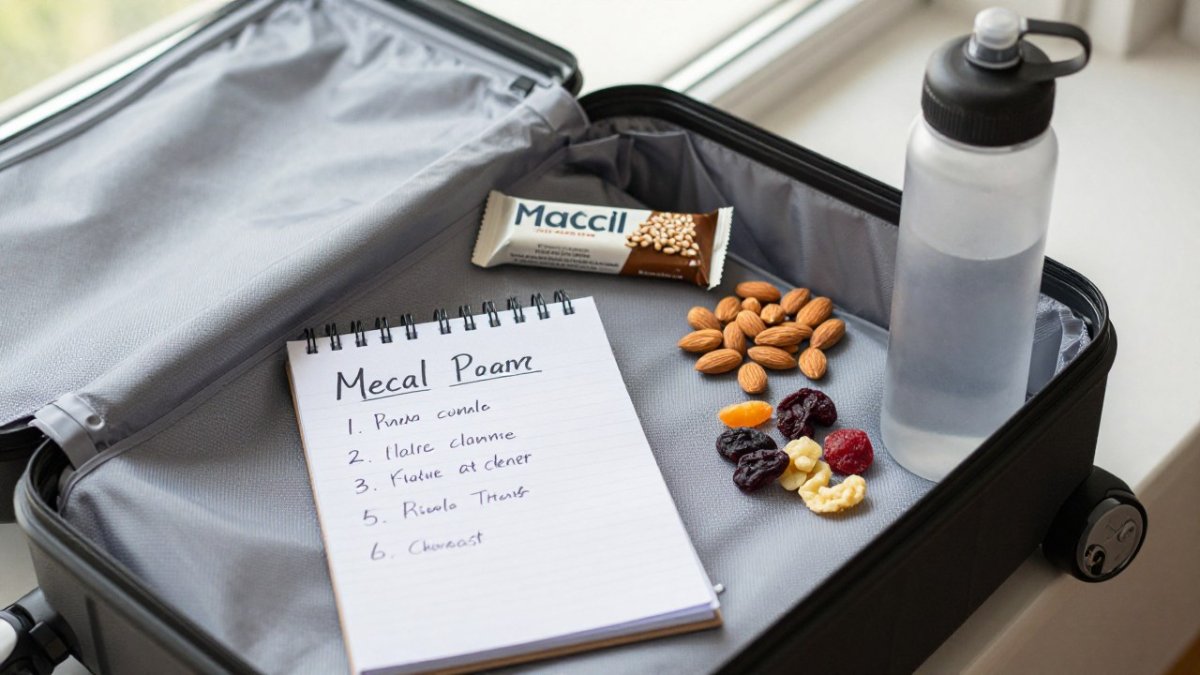
What to Pack in a Travel Snack Kit
Build a kit around protein and fiber. Both slow digestion and steady energy.
- Nuts and seeds
- Protein bars with low sugar
- Dried fruit in small portions
- Whole-grain crackers
- A refillable water bottle
Watch out: packing only carbs leaves you hungry an hour later. Add protein to every snack.
How to Eat Healthy While Staying in a Hotel
Hotel eating is where most travel plans fall apart. The fix is to read the buffet before you pick up a plate. Walk the whole line first, then choose.
Reading the Breakfast Buffet
- Start with eggs, plain yogurt, or fruit
- Add whole-grain toast or oatmeal
- Skip pastries, sugary cereal, and juice
- Watch portion size on cheeses and cured meats
Low-fat yogurt with fresh fruit and a handful of nuts is a strong base. It pairs protein with fiber and keeps you full until lunch.
How to Exercise While Traveling Without a Gym
You do not need equipment to stay active. Walking is the most reliable tool you have. A 20-minute brisk walk after meals helps your body handle blood sugar.
Try these:
- Take the stairs instead of the elevator
- Walk during layovers
- Do bodyweight squats and pushups in your room
- Use a resistance band that fits in your bag
Movement breaks every couple of hours matter on long travel days. Set a phone reminder if you tend to forget.
How to Avoid Gaining Weight While Traveling
Weight gain on the road comes from small, repeated extras, not one big meal. The fix is to protect a few daily habits. Keep portions reasonable, move daily, and guard your sleep.
Hydration, Alcohol, and Late Nights
Water first, always. Thirst often reads as hunger. Carry a bottle and refill it often.
- Choose water or sparkling water over sugary drinks
- Limit alcohol, which adds calories and hurts sleep
- Cap late nights to protect sleep quality
Watch out: airport and hotel drinks add up fast. One fancy coffee and a cocktail can undo a good day of eating.
How to Eat Healthy While Traveling for Work
Work trips bring business dinners and airport meals, two of the hardest settings. The strategy is to plan around them, not fight them.
Business Dinners and Airport Meals
At dinners, pick grilled protein and vegetables. Order sauces on the side. Eat slowly and stop when you are full, not when the plate is empty.
At airports, skip the fast-food line. Look for:
- Pre-made salads with protein
- Fresh fruit cups
- Low-fat yogurt
- Nuts and water
For a deeper plan, see our guide on building data-driven health plans for executives. High-stress professionals juggling dinners and flights may also want to explore integrative medicine for high stress professionals.
Managing Medications and Blood Sugar on the Road
Medication routines are the most overlooked part of travel health, and they are also where metabolic health is easiest to derail. The CDC's Yellow Book guidance for travelers with chronic illnesses advises preparing several weeks ahead and confirming that pharmacies at your destination can provide care. Build that lead time into your plan rather than treating packing as a last-minute task.
Prepare Before You Pack
- Schedule a clinician visit well before departure to review dosing, refills, and travel duration.
- Request enough medication to cover the full trip plus extra days in case of delays.
- Keep medications in original labeled containers in your carry-on, not checked luggage.
- Carry a printed copy of prescriptions and a list of generic drug names in case a local pharmacy needs to match them.
- Confirm with your insurer or pharmacy whether refills away from home are covered.
Time Zones and Dosing
Crossing time zones is the hardest part of medication management because the body's clock and the dosing clock drift apart. A common pattern is to keep the home schedule for short trips and shift gradually for longer ones, but the right approach depends on the drug. Ask your clinician or pharmacist before you travel how to handle a time-zone change, and write the plan down so you are not doing math at 30,000 feet. For medications with narrow dosing windows, a written schedule with local times is safer than improvising.
Storage and Supply
- Check the label for storage temperature; most oral medications tolerate room temperature, but some require refrigeration.
- Use an insulated pouch with a gel pack for temperature-sensitive drugs, and keep it in carry-on.
- Pack a small supply of glucose tablets or fast-acting carbohydrate if you monitor blood sugar.
- Bring backup monitoring supplies: extra test strips, lancets, or sensor supplies, plus a backup meter if you use one.
Monitoring on the Road
Check blood sugar on your normal schedule when you can, and expect readings to shift with new foods, activity, and sleep. Log readings alongside meals and activity so patterns are visible rather than guessed at. If you take GLP-1 medication or monitor blood sugar, talk to your clinician before you travel. Do not adjust doses on your own. For personalized guidance, you can book a personalized regenerative health consultation.
Watch out: confusion about a dosing schedule is a reason to confirm the plan in advance rather than deciding mid-trip.
Adjusting Your Routine for Flights, Road Trips, and Time Zones
Each travel mode disrupts habits differently. Match your plan to the trip rather than applying one generic routine to every setting.
| Travel Mode | Main Risk | Best Fix |
|---|---|---|
| Flight | Long sitting, dehydration | Walk the aisle, drink water |
| Road trip | Snack grazing, fast food | Pack a cooler, plan stops |
| Cruise | Constant food access | Set meal times, use the gym |
| International | Jet lag, time zones | Get daylight, shift sleep early |
Flights
- Book an aisle seat when you can so movement breaks are easy.
- Stand and walk every one to two hours on longer flights; set a phone reminder.
- Drink water steadily and skip alcohol and sugary drinks, which add calories and disrupt sleep.
- Pack a protein-and-fiber snack for delays, since airport options are limited and expensive.
Road Trips
- Pack a cooler with cut vegetables, fruit, cheese, and water so stops are for fuel, not fast food.
- Plan stops around meal times rather than grazing continuously.
- Use rest stops for a five- to ten-minute walk, which breaks up long sitting.
Cruises
- Set meal times instead of grazing all day, since food access is constant.
- Use the ship's gym or walk the deck for daily movement.
- Choose grilled protein and vegetables at buffets and keep desserts to occasional rather than every meal.
International Travel and Time Zones
Jet lag is a schedule problem, not just a sleep problem. A practical routine connects four levers:
- Light: get morning daylight at your destination to anchor the body clock.
- Sleep: shift bedtime toward local time a day or two before you leave, and keep a consistent wake time after arrival.
- Meals: eat on local meal times to reinforce the new schedule, and avoid heavy late meals.
- Movement: take a walk in daylight after arrival, which supports both alertness and blood-sugar control.
A behavior-based approach to lifestyle change, as described in the Journal of Obesity & Metabolic Syndrome, supports lasting habits better than quick fixes. Treat the first day at your destination as a reset day: daylight, local meals, and a walk do more for your metabolic rhythm than a nap that pushes sleep later.
Watch out: sleeping in on the first morning after a long flight feels good but delays adjustment, so cap the catch-up nap and get outside instead.
Travel will always pull at your routine. The goal is not perfection. It is protecting the few habits that keep your energy and blood sugar steady. BioLife Science helps clients build travel-proof plans through DNA and methylation testing, concierge-style care, and therapies like IV hydration and GLP-1 support. Our personalized protocols are built around your biology, not a generic checklist. Get started with BioLife Science and keep your metabolic health on track, wherever you go.
Frequently Asked Questions
What is the 3-3-3 rule to lose weight?
The 3-3-3 rule is a popular travel framework: three meals a day, three snacks or movement breaks, and three liters of water. It is not a clinical protocol and has no published research behind it, so treat it as a simple checklist rather than a prescription. What matters for metabolic health is the underlying behavior it encourages, such as consistent meal timing, regular movement, and adequate hydration. If you are managing a condition like diabetes or prediabetes, work with your clinician on a plan that fits your medications and blood sugar targets.
How do I manage blood sugar while traveling?
Travel health guidance for people with chronic conditions generally advises preparing ahead and confirming that pharmacies at the destination can supply needed medications. Carry medication in original labeled containers, keep a written list of prescriptions, and pack a glucose meter and fast-acting carbohydrate for travel days. Long stretches of sitting on flights and shifted meal times can affect readings, so check blood sugar more often than usual during the first day or two. Discuss any insulin or GLP-1 dose timing changes with your prescribing clinician before you leave.
How can I avoid gaining weight while traveling?
Start with the habits that are easiest to control: pack portable snacks so you are not choosing from airport or gas station shelves, keep portion sizes at restaurants by ordering an appetizer as your entrée, and swap sugary drinks for water or unsweetened options. Add movement where it fits naturally, such as walking through the terminal or taking a fifteen-minute walk after dinner. Travel periods can reduce daily physical activity and create energy imbalance, so building movement into the itinerary matters as much as food choices.
What should I eat while traveling to support metabolic health?
Build meals around protein, fiber, and vegetables, then add carbohydrates in a portion you can see. At hotels, look for eggs, plain low-fat yogurt, fresh fruit, and whole-grain options rather than pastries and sweetened cereals. At restaurants, choose grilled or roasted proteins, ask for sauces on the side, and order a side of vegetables instead of fries. Keep portable snacks like nuts, jerky, and fruit on hand so long travel days do not end in a vending machine decision.
